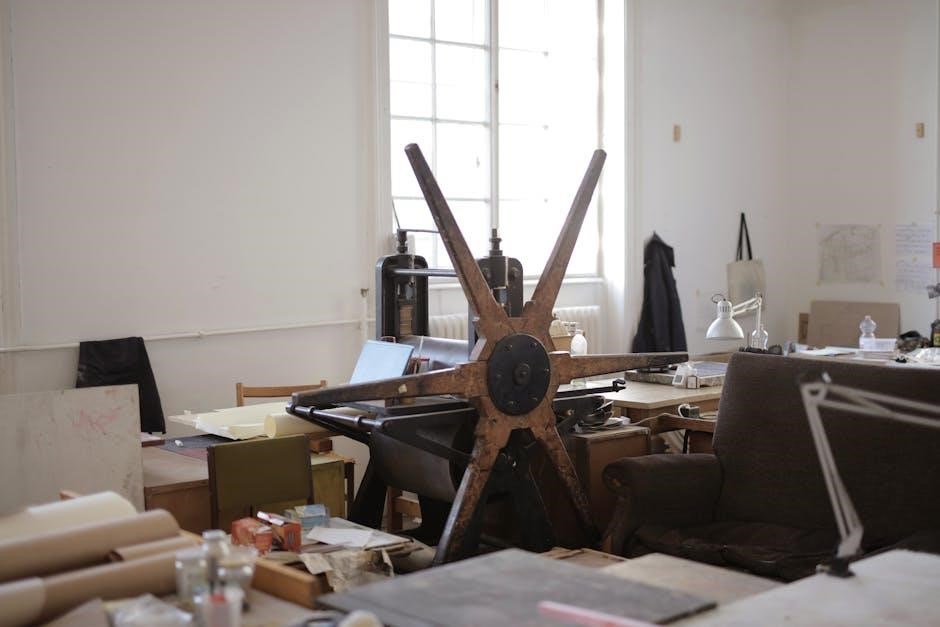
manual press
Manual Press: A Comprehensive Guide (Updated 04/15/2026)
Today‚ April 15th‚ 2026‚ we delve into manual presses‚ exploring their capabilities alongside modern alternatives like hydraulic‚ pneumatic‚ and electric systems for various applications.
What is a Manual Press?
A manual press is a machine utilizing human power to exert compressive force. Unlike automated counterparts‚ it relies on levers‚ screws‚ or other mechanical advantages to amplify applied effort. This makes it a versatile tool for tasks requiring controlled pressure‚ offering a cost-effective solution where extensive automation isn’t necessary.
These presses are characterized by their simplicity and portability‚ often lacking the complex electrical or pneumatic systems of more advanced machines. They are fundamentally about converting manual input into substantial force‚ enabling processes like forming‚ shaping‚ and extracting materials. Their operation demands direct physical engagement‚ providing tactile feedback and precise control over the applied pressure.
Historically‚ manual presses represent an early stage in mechanical power amplification‚ paving the way for the sophisticated press technologies we utilize today;

Historical Overview of Manual Presses
The origins of manual presses trace back to ancient civilizations‚ with early examples used for pressing olives and grapes for oil and wine production. Significant development occurred during the Gutenberg era in the 15th century‚ with the invention of the printing press – a pivotal moment leveraging screw press technology for mass communication;

Throughout the Industrial Revolution‚ manual presses remained crucial‚ adapted for various manufacturing processes. Improvements focused on enhancing mechanical advantage through refined lever systems and screw designs. These presses were foundational in early metalworking and material forming techniques.
While largely superseded by powered presses in large-scale production‚ manual presses continue to hold relevance due to their simplicity‚ affordability‚ and suitability for specialized‚ small-batch applications‚ representing a continuous thread in manufacturing history.

Types of Manual Presses
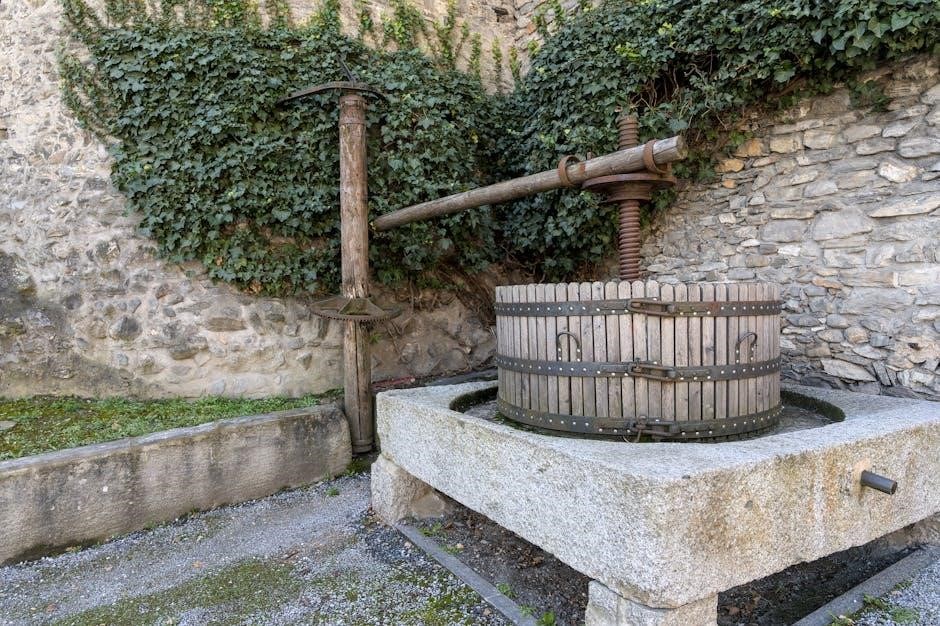
Manual presses aren’t a single design; they encompass several mechanical approaches. Screw presses utilize a threaded spindle to apply force‚ offering controlled pressure ideal for tasks like woodworking and some metal forming. Lever presses employ a mechanical advantage through a lever arm‚ providing quick‚ powerful bursts of force suitable for punching or bending.
A third common type is the rack and pinion press‚ which converts rotational motion into linear force via a geared mechanism. These are often used in applications requiring consistent‚ adjustable pressure. Each type offers unique advantages depending on the specific application and desired force characteristics.
The choice depends on factors like required force‚ speed of operation‚ and precision needed for the task at hand.
Screw Presses
Screw presses represent a foundational design in manual pressing technology‚ utilizing a large threaded screw to exert downward force. Rotating the screw translates into linear motion‚ applying consistent pressure to the workpiece. This controlled force makes them exceptionally well-suited for applications demanding precision and gradual compression.
Historically‚ they were vital in printing and winemaking‚ and continue to find use in woodworking‚ gluing‚ and smaller-scale metal forming. The advantage lies in their simplicity and ability to maintain pressure for extended periods. However‚ they generally offer slower operation compared to lever or hydraulic systems.
Adjusting the screw allows for fine-tuning of the applied force‚ making them versatile for various tasks.
Lever Presses
Lever presses employ mechanical advantage through a lever arm to amplify applied force. This design allows operators to generate significant pressure with relatively less physical effort. The principle is simple: a longer lever arm translates to greater force multiplication‚ making them ideal for tasks requiring bursts of power.
Commonly used in metalworking for punching‚ bending‚ and forming‚ lever presses offer a quicker operational cycle than screw presses. They are particularly effective for repetitive tasks where speed and force are crucial. However‚ maintaining consistent pressure throughout the entire stroke can be more challenging.
The design’s robustness contributes to its durability and longevity in demanding industrial settings.
Rack and Pinion Presses
Rack and pinion presses utilize a gear system – a circular pinion driving a linear rack – to generate force. This mechanism provides a smooth and consistent pressing action throughout the stroke‚ offering precise control over applied pressure. Unlike screw or lever presses‚ they don’t rely on continuous rotation or a single forceful movement.
These presses are favored in applications demanding uniform pressure distribution‚ such as certain metal forming operations and specialized assembly tasks. The rack and pinion system allows for adjustable stroke lengths and force settings‚ enhancing versatility.
Their relatively compact design and ease of operation make them suitable for smaller workshops and production runs.

Applications of Manual Presses
Manual presses find diverse uses‚ from traditional brick making and metalworking to specialized tasks like essential oil extraction and fruit pressing for beverages.
Brick Making with Manual Presses
Historically‚ manual presses were fundamental in brick production‚ offering a cost-effective solution before automated systems. These presses compact clay and aggregates into consistent brick shapes‚ relying on human power for operation. While production capacity is naturally lower compared to hydraulic presses‚ manual presses remain viable for smaller-scale operations or regions with limited access to electricity.
The appeal lies in their simplicity and lower initial investment. However‚ the physical exertion required impacts output and consistency. A detailed cost analysis‚ comparing manual and hydraulic options‚ is crucial for builders and entrepreneurs evaluating their needs. Factors include labor costs‚ brick demand‚ and long-term operational efficiency.
Production Capacity of Manual Brick Presses
Generally‚ a skilled operator using a manual brick press can produce between 300 to 500 bricks per day‚ contingent on brick size‚ clay consistency‚ and operator stamina. This output is significantly less than hydraulic presses‚ which can yield thousands of bricks daily with minimal labor. However‚ manual presses excel in situations demanding smaller batches or customized brick designs.
Factors influencing capacity include the press’s mechanical advantage‚ the clay’s plasticity‚ and the operator’s technique. Regular breaks are essential to maintain consistent pressure and prevent fatigue. While not suited for large-scale commercial operations‚ manual presses provide a sustainable and affordable option for individual builders or small workshops.
Cost Analysis: Manual vs. Hydraulic Brick Presses
Initially‚ manual brick presses represent a substantially lower capital investment‚ ranging from $500 to $2‚000‚ depending on size and construction. Conversely‚ hydraulic presses demand an upfront expenditure of $5‚000 to $30‚000 or more. However‚ the long-term cost comparison is more nuanced.
Hydraulic presses boast lower per-brick labor costs due to their higher production rates‚ offsetting the initial investment over time. Manual presses require consistent manual labor‚ increasing operational expenses. Furthermore‚ hydraulic systems incur costs for electricity and maintenance of hydraulic components. Ultimately‚ the optimal choice hinges on production volume and long-term operational goals.
Metalworking Applications
Manual presses find significant utility in diverse metalworking processes‚ particularly for smaller-scale operations and specialized tasks. Specifically‚ they excel in sheet metal forming‚ enabling the creation of bends‚ curves‚ and simple shapes with appropriate dies. Additionally‚ manual presses are well-suited for punching and piercing operations‚ producing clean holes in metal sheets.
These presses offer a cost-effective solution for prototyping and low-volume production runs‚ avoiding the expense of automated systems. However‚ they require skilled operators to ensure precision and safety. The force applied is directly proportional to the operator’s effort‚ demanding physical strength and control for consistent results.
Sheet Metal Forming
Manual presses facilitate sheet metal forming through the application of controlled force using specialized dies and tooling. This process allows for bending‚ flanging‚ and shaping of metal sheets into desired configurations. The operator’s skill is crucial in achieving accurate angles and consistent results‚ as the pressure applied is directly controlled by hand.
Simple forms and curves are readily achievable‚ making manual presses ideal for prototyping and small-batch production. However‚ complex geometries may require multiple operations and careful die design. Compared to automated systems‚ manual forming is slower but offers greater flexibility for one-off projects and custom designs.
Punching and Piercing Operations
Manual presses excel in performing punching and piercing operations on sheet metal and other materials. Utilizing appropriately sized punches and dies‚ these presses create clean‚ precise holes with controlled force. The operator manually actuates the press‚ ensuring accurate alignment and consistent pressure for each stroke.
These operations are fundamental in metalworking for creating fasteners‚ mounting points‚ and intricate designs. While hydraulic and pneumatic presses offer higher speeds‚ manual presses provide a cost-effective solution for low-volume production and detailed work. Proper die maintenance and operator technique are vital for achieving quality results and extending tool life.
Other Industrial Uses
Beyond brick making and metalworking‚ manual presses find diverse applications across various industries. Notably‚ they are employed in essential oil extraction‚ utilizing pressure to release aromatic compounds from plant materials. Similarly‚ in winemaking and cider production‚ manual presses gently crush fruits to extract juice‚ preserving flavor profiles.
These presses are also valuable in smaller-scale food processing‚ like pressing cheeses or olives. Their simplicity and lack of reliance on electricity make them suitable for remote locations or operations prioritizing sustainability. The adaptability of manual presses allows for customized tooling‚ catering to unique industrial needs and specialized tasks where precision and control are paramount.
Essential Oil Extraction
Manual presses offer a gentle‚ low-tech solution for extracting essential oils from botanicals. Unlike high-heat or solvent-based methods‚ pressing preserves delicate aromatic compounds‚ resulting in higher quality oils. Typically‚ plant material is placed within a pressing chamber‚ and controlled pressure is applied using the manual mechanism.
This process ruptures oil-containing cells‚ releasing the fragrant essence. The resulting mixture is then filtered to separate the oil from plant matter. While slower than industrial methods‚ manual pressing is ideal for small-batch production and artisanal applications‚ favored by those prioritizing purity and traditional techniques. It’s particularly suited for delicate flowers and herbs.
Wine and Cider Making
Manual presses have a long history in wine and cider production‚ offering a traditional method for separating juice from fruit pulp. After crushing grapes or apples‚ the resulting mash‚ known as the ‘must’‚ is loaded into the press. Applying gradual‚ controlled pressure with the manual mechanism extracts the juice‚ minimizing the extraction of bitter tannins from seeds and skins.
This careful process yields a cleaner‚ more refined juice ideal for fermentation. While requiring more physical effort than automated presses‚ manual presses allow winemakers and cider producers greater control over the extraction process. They are particularly favored for small-scale‚ artisanal operations where quality and tradition are paramount‚ producing exceptional results.

Manual Press vs. Other Press Types
Comparing manual presses to hydraulic‚ pneumatic‚ and electric models reveals trade-offs in force‚ precision‚ and control‚ impacting suitability for diverse industrial tasks.
Manual Press vs. Hydraulic Press
Hydraulic presses offer significantly greater force capabilities compared to manual presses‚ making them ideal for demanding applications like large-scale metal forming. However‚ this power comes at a cost; hydraulic systems are generally more complex and expensive.
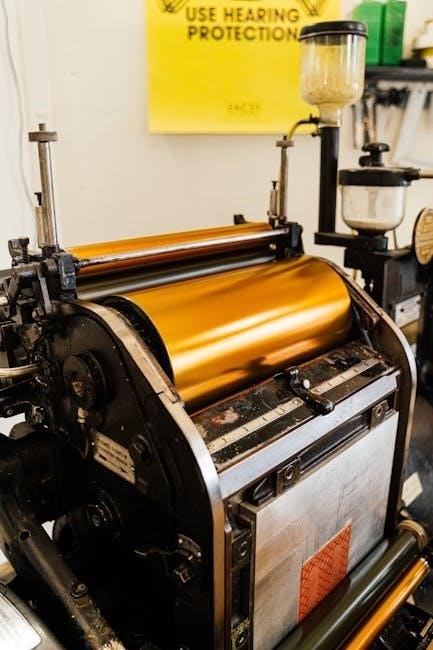
Durability is a key consideration. Manual presses‚ with fewer moving parts‚ often exhibit longer lifespans with proper maintenance‚ while hydraulic systems rely on seals and fluid integrity. Efficiency heavily favors hydraulic presses due to their amplified force and faster cycle times.
Ideal use cases diverge sharply. Manual presses excel in low-volume‚ precision tasks like small-scale crafting or educational settings. Hydraulic presses dominate high-volume production and applications requiring substantial force‚ such as forging or deep drawing.
Durability Comparison
Manual presses generally boast superior long-term durability due to their simpler mechanical design. Fewer components translate to reduced potential failure points‚ minimizing the need for frequent repairs or replacements. The robust construction‚ often utilizing cast iron or steel‚ contributes to their resilience.
Hydraulic presses‚ while powerful‚ are inherently more susceptible to wear and tear. Hydraulic fluid leaks‚ seal degradation‚ and pump failures are common concerns requiring regular maintenance. These systems depend on precise component interaction‚ increasing vulnerability.
Consistent use and proper lubrication are crucial for both types‚ but manual presses often withstand harsher environments and less meticulous care without significant performance decline. Their inherent simplicity provides a distinct advantage in longevity.
Efficiency Comparison
Manual presses inherently lack the speed and consistent force output of powered presses. Operation relies entirely on human effort‚ leading to variable production rates and potential operator fatigue. Cycle times are significantly longer compared to hydraulic‚ pneumatic‚ or electric alternatives.
Hydraulic presses offer substantially higher efficiency‚ delivering consistent and controllable force with minimal operator exertion. Automated systems further enhance throughput‚ drastically reducing cycle times and increasing production volume.
However‚ efficiency isn’t solely about speed. Manual presses consume no electricity‚ offering a sustainable advantage. While slower‚ they can be suitable for low-volume‚ specialized tasks where precision outweighs rapid production.
Ideal Use Cases for Each
Manual presses excel in small-scale operations‚ artisan workshops‚ and educational settings where hands-on learning is prioritized. They suit tasks requiring precise control and minimal production volume‚ like jewelry making or small-batch prototyping.
Hydraulic presses are best for high-volume manufacturing‚ deep drawing‚ forging‚ and applications demanding substantial force. Automotive‚ aerospace‚ and large-scale metal fabrication benefit from their power and consistency.
Pneumatic presses shine in rapid‚ repetitive tasks like stamping and forming lightweight materials. Assembly lines and applications needing quick cycle times find them ideal. Electric presses‚ with closed-loop control‚ are perfect for precision assembly requiring accurate ram positioning‚ speed‚ and force.
Manual Press vs. Pneumatic Press
Manual presses rely on human power‚ offering simplicity and control‚ but limited force and speed. They are ideal for low-volume‚ precise work where energy efficiency isn’t paramount.
Pneumatic presses‚ conversely‚ utilize compressed air to generate significant force at high speeds. This makes them suitable for repetitive tasks like stamping and forming‚ particularly with lighter materials. However‚ pneumatic systems require an air compressor‚ adding to operational costs and complexity.
While pneumatic presses boast faster cycle times and greater force‚ manual presses offer a quieter operation and don’t depend on external power sources beyond human effort. The choice hinges on production scale and required force.
Manual Press vs. Electric Press
Manual presses provide a tactile experience and direct control‚ excelling in small-scale‚ detail-oriented tasks. Their simplicity translates to lower initial costs and minimal maintenance requirements‚ but output is limited by human strength and endurance.
Electric presses‚ however‚ deliver consistent and substantial force with automated operation. Closed-loop control features allow for precise ram positioning‚ speed‚ and force regulation‚ crucial for intricate assembly and high-volume production. They offer repeatability and reduced operator fatigue.
Despite the benefits of electric presses‚ manual presses remain valuable for applications where precision outweighs speed‚ or where electricity access is limited. Electric presses demand higher upfront investment and ongoing energy consumption.
Closed-Loop Control Features
Electric presses distinguish themselves through sophisticated closed-loop control features‚ a capability absent in manual presses. These systems utilize sensors and feedback mechanisms to continuously monitor and adjust press parameters – ram position‚ speed‚ and applied force – during operation.
This real-time adjustment ensures consistent results‚ minimizing variations and maximizing precision. Operators can program specific profiles for each task‚ guaranteeing repeatability even across large production runs. Such control is vital for complex assembly processes demanding accuracy.
Essentially‚ closed-loop control transforms the press into a responsive‚ intelligent machine‚ optimizing performance and reducing the risk of errors. This level of automation is a key advantage of electric presses over their manual counterparts.

Operating a Manual Press: Safety and Technique
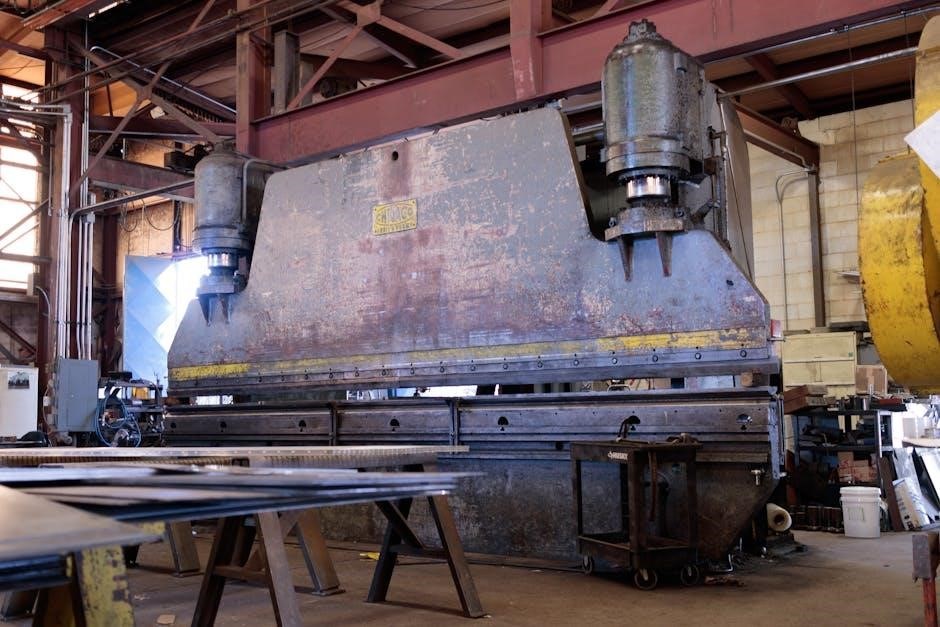
Prioritizing safety and mastering proper technique are crucial when using a manual press‚ ensuring both operator well-being and optimal performance of the machine.
Safety Precautions
Operating a manual press demands strict adherence to safety protocols. Always wear appropriate personal protective equipment (PPE)‚ including safety glasses‚ gloves‚ and sturdy footwear‚ to shield against potential hazards. Before operation‚ thoroughly inspect the press for any signs of damage or wear‚ addressing issues before commencing work.
Ensure the work area is clear of obstructions and well-lit. Never place hands or any body part within the press’s point of operation during use. Maintain a firm grip and stable stance while applying force. Be mindful of pinch points and potential crushing hazards.
Avoid loose clothing or jewelry that could become entangled in the machinery. Always disconnect power sources when performing maintenance or adjustments. Familiarize yourself with emergency stop procedures and keep first-aid readily available. Regular safety training is paramount for all operators.
Proper Operating Procedure
Initiating operation requires careful preparation. Securely position the workpiece within the press‚ ensuring proper alignment with the tooling. Slowly and deliberately apply force‚ monitoring the process for any irregularities or resistance. Avoid jerky or sudden movements‚ as these can compromise accuracy and safety.
Maintain a consistent and controlled rate of pressure application throughout the operation. Never exceed the press’s rated capacity. Once the desired deformation or compression is achieved‚ gradually release the pressure‚ avoiding abrupt release which could damage the workpiece or the press itself.
After each cycle‚ inspect the workpiece for quality and conformity. Regularly check tooling for wear or damage. Always follow the manufacturer’s guidelines for specific operating parameters and best practices.
Maintenance and Troubleshooting
Regular maintenance is crucial for longevity. Inspect all moving parts for lubrication‚ applying grease as needed to ensure smooth operation. Check for loose bolts or fasteners‚ tightening them to prevent instability. Examine the press frame for any signs of stress or cracking.
Common issues include difficulty applying pressure‚ inconsistent results‚ or unusual noises. If pressure is low‚ check for leaks or worn seals. Inconsistent results often indicate misalignment or worn tooling. Unusual noises may signal bearing failure or internal damage.
A preventative schedule should include weekly lubrication‚ monthly inspections‚ and annual deep cleaning. Address any issues promptly to avoid further damage and maintain optimal performance.
Common Issues and Solutions
Insufficient pressure is a frequent problem; often caused by worn seals or air leaks within the hydraulic system (if applicable to the press type). Replacing seals or tightening connections usually resolves this. Inconsistent pressure can stem from unevenly distributed force – ensure the workpiece is properly centered.
Sticking or slow movement indicates inadequate lubrication. Thoroughly clean and re-grease all moving parts. Unusual noises‚ like grinding‚ suggest bearing wear. Replacement is typically necessary. Frame instability requires tightening bolts and inspecting for structural damage.
Always disconnect power before attempting repairs; Consult the manufacturer’s manual for specific troubleshooting steps and part diagrams. Prioritize safety and proper tool usage during all maintenance procedures.
Regular Maintenance Schedule
Daily checks should include visual inspection for damage‚ loose parts‚ and lubrication needs. Weekly maintenance involves cleaning the press‚ wiping down surfaces‚ and inspecting hydraulic fluid levels (if applicable). Monthly tasks require a thorough lubrication of all moving components – gears‚ levers‚ and pivot points.
Every three months‚ inspect and tighten all bolts and fasteners. Check for wear on critical parts like seals and bearings. Semi-annually‚ examine the frame for cracks or structural weaknesses. Annually‚ a complete overhaul is recommended‚ including fluid changes‚ bearing replacements‚ and a professional inspection.
Keep a detailed maintenance log to track repairs and schedule preventative measures‚ ensuring longevity and optimal performance.
Future Trends in Manual Press Technology
Hybrid designs are emerging‚ blending manual operation with limited automation for increased efficiency. Expect to see integrated sensors providing real-time feedback on pressure and force‚ enhancing precision. Ergonomic improvements will focus on reducing operator fatigue‚ with adjustable handles and optimized lever mechanics.
Advanced materials‚ like lightweight alloys and reinforced polymers‚ will reduce press weight without sacrificing durability. Modular designs allowing for easy customization and adaptation to specific tasks are also on the horizon. Digital integration‚ including data logging and remote monitoring‚ will become more common.
Ultimately‚ the future of manual presses lies in enhancing usability and performance through smart‚ incremental innovations.