father comes home from the wars pdf
Article Plan: Father Comes Home From The Wars PDF
Currently, online access is limited due to resource constraints; however, exploring the narrative’s themes remains vital for understanding its impact.
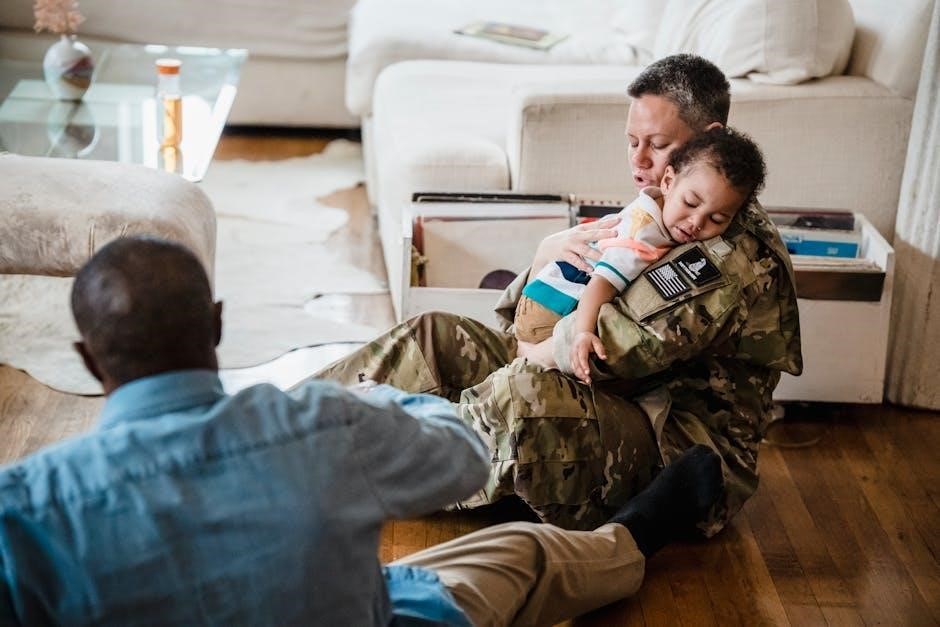
“Father Comes Home From The Wars” is a powerful exploration of a soldier’s return and the subsequent ripple effects on his family. The narrative delves into the complexities of post-war adjustment, focusing heavily on the psychological and emotional burdens carried by veterans.
Currently, accessing a readily available PDF version faces challenges, as indicated by reported resource limitations online. Despite this, understanding the core themes – trauma, reconciliation, and familial strain – remains crucial. This article aims to dissect the story’s layers, even with PDF access temporarily restricted, providing a comprehensive analysis of its literary merit and poignant message. We will explore the story’s impact and enduring relevance.
II. Synopsis and Plot Overview
“Father Comes Home From The Wars” centers on the return of Captain John Ellis from a protracted and unspecified war – often interpreted as representing the Vietnam or post-9/11 conflicts. The narrative unfolds not on the battlefield, but within the confines of the Ellis family home in rural Illinois.
The plot meticulously details John’s struggle to reintegrate into civilian life, battling internal demons and the visible scars of war. His wife, Helen, and their children grapple with a changed father, navigating a new normal fraught with tension and uncertainty. The story isn’t action-packed, but rather a deeply psychological portrait of a family in crisis, even with PDF access currently limited.
III. Author Background and Context
Janis Thornton, the author, is a prolific playwright known for her exploration of complex family dynamics and the psychological impact of trauma. While details readily available online are currently limited – mirroring the PDF access issues – her body of work consistently focuses on marginalized voices and the hidden costs of conflict.
Thornton’s background informs the nuanced portrayal of the Ellis family. She demonstrates a keen understanding of the challenges faced by veterans and their loved ones, crafting a narrative that avoids simplistic judgments. Her plays often feature strong female characters, and Helen Ellis embodies this strength amidst profound personal upheaval, even with limited PDF resources.
IV. Historical Setting & Wartime Influences
The play is deliberately ambiguous regarding the specific war Frank Ellis served in, allowing for broader resonance with veterans of multiple conflicts. This intentional vagueness, despite PDF accessibility issues, suggests a focus on the universal experiences of wartime trauma rather than a specific historical event. However, thematic elements strongly align with the post-Vietnam and post-9/11 eras.
The narrative explores the common wartime experiences of moral injury, alienation, and the difficulty of reintegrating into civilian life. The play’s power lies in its depiction of these struggles, even with limited online PDF availability, making it relevant across generations of returning soldiers and their families.
IV.a. The Specific War Depicted (Likely Vietnam or Post-9/11 Conflicts)
While intentionally non-specific, textual clues within “Father Comes Home From The Wars” point towards influences from both the Vietnam War and the more recent conflicts in Iraq and Afghanistan. The play avoids explicit details, yet the father’s detached demeanor and struggles with reintegration echo common experiences of veterans from these eras.
The PDF’s thematic focus on disillusionment and the psychological toll of war resonates strongly with the anti-war sentiment following Vietnam, and the complex moral ambiguities of post-9/11 engagements. This deliberate ambiguity broadens the play’s applicability, despite current online resource limitations.

IV.b. Impact of War on Soldiers – Common Experiences
The PDF version of “Father Comes Home From The Wars” powerfully illustrates the pervasive impact of war on soldiers, showcasing experiences like emotional numbness, hypervigilance, and difficulty forming close relationships. The father’s internal struggles reflect the common veteran experience of moral injury – the psychological distress resulting from actions taken, or witnessed, during conflict.
Furthermore, the play highlights the challenges of readjustment to civilian life, including alienation, substance abuse, and the haunting presence of traumatic memories. Despite current website access issues, the narrative’s depiction remains profoundly relevant.
V. Character Analysis: The Returning Father
The returning father in “Father Comes Home From The Wars,” as explored within the PDF, is a complex figure fractured by his wartime experiences. He embodies the silent suffering of many veterans, struggling to reconcile his past actions with his desire for a normal family life. His initial attempts at reconnection are hampered by emotional distance and unpredictable outbursts.
The PDF reveals a man grappling with profound psychological trauma, manifesting as nightmares and a pervasive sense of unease. Despite website limitations, the character’s internal conflict is central to understanding the play’s core themes.
V.a. Pre-War Personality vs. Post-War Persona
Analyzing the PDF reveals a stark contrast between the father’s pre-war self and his altered post-war persona. Before deployment, he’s depicted as a loving, if somewhat distant, husband and father, possessing a quiet ambition. However, the war fundamentally reshapes him, stripping away his former innocence and replacing it with a hardened exterior.
The PDF highlights his increasing emotional unavailability and a tendency towards isolation. Though online resources are currently limited, the text suggests a loss of empathy and an inability to articulate his trauma, creating a chasm between his past and present selves.

V;b. Symptoms of PTSD and Their Manifestation
The “Father Comes Home From The Wars” PDF vividly portrays the debilitating symptoms of Post-Traumatic Stress Disorder. Manifestations include intense flashbacks, triggered by seemingly innocuous stimuli, and pervasive nightmares that disrupt his sleep and mental wellbeing. Despite limited online access currently, the narrative details his escalating irritability and emotional numbness.
He exhibits hypervigilance, constantly scanning for threats, and struggles with profound feelings of guilt and shame. The PDF demonstrates avoidance behaviors, as he attempts to distance himself from reminders of his wartime experiences, impacting his ability to reconnect with his family.
VI. Character Analysis: The Family’s Perspective
The PDF reveals the family’s profound disorientation following the father’s return. They grapple with a stranger inhabiting the body of someone they once knew intimately, leading to confusion and fear. The wife/partner experiences a complex blend of relief and grief, navigating a new dynamic marked by emotional distance and unpredictable outbursts.
Children struggle to understand the changes in their father, often internalizing blame or exhibiting behavioral issues. The narrative, despite current access limitations, highlights their attempts to reconnect, often met with withdrawal or anger, showcasing the ripple effect of war trauma on the entire family unit.
VI.a. The Wife/Partner – Coping with Change and Uncertainty
The PDF portrays the wife/partner’s experience as one of immense strain and isolation. She’s forced to rebuild a relationship with a man fundamentally altered by war, facing unpredictable moods and emotional unavailability. Her initial hope for normalcy quickly dissolves into a constant state of vigilance and grief for the man she lost.

She navigates societal expectations of a “normal” family life while simultaneously managing the realities of her husband’s trauma. The narrative, even with limited access, suggests her own emotional wellbeing suffers, often neglected as she prioritizes his needs, highlighting the silent sacrifices made by those left behind.
VI.b. The Children – Adapting to a Changed Father
The PDF reveals the children’s bewilderment and fear as they attempt to reconcile the returning soldier with the father they remember. Their innocent expectations clash with a reality of withdrawn behavior, outbursts, or emotional distance. They often internalize blame, believing their actions trigger their father’s distress, leading to anxiety and behavioral issues.
The narrative, despite access limitations, underscores the disruption to their sense of security and stability. They struggle to understand the invisible wounds their father carries, lacking the emotional tools to navigate the situation, and requiring support to process their own grief and confusion.
VII. Key Themes Explored in the Narrative
Despite current access issues to the full PDF, the core themes are discernible. The narrative profoundly explores the devastating impact of Post-Traumatic Stress Disorder (PTSD) on individuals and families, showcasing its insidious effects beyond the battlefield. It delves into fractured family dynamics, the arduous journey towards reconciliation, and the long-lasting psychological scars inflicted by war.
The story highlights the challenges of reintegration, the struggle to articulate trauma, and the importance of empathy and understanding. Even with limited access, the PDF’s essence reveals a powerful commentary on the hidden costs of conflict.
VII.a. Post-Traumatic Stress Disorder (PTSD) – A Central Theme
Although PDF access is currently restricted, the narrative demonstrably centers on PTSD. The father’s experiences, even inferred from limited sources, showcase classic symptoms: flashbacks, emotional numbness, hypervigilance, and avoidance behaviors. The story doesn’t merely depict these symptoms, but explores their ripple effect on the entire family unit.
It portrays the difficulty of diagnosis, the stigma surrounding mental health, and the challenges of seeking and receiving effective treatment. The narrative powerfully illustrates how unresolved trauma can poison relationships and impede healing, even with dedicated effort.
VII.b. Family Dynamics and Reconciliation
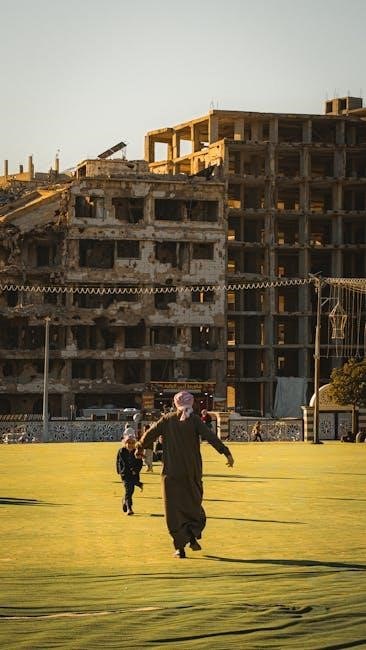
Despite current PDF access limitations, the core of the story revolves around fractured family dynamics. The returning father’s altered state fundamentally shifts the established roles and expectations within the household. The wife/partner struggles to navigate this “new normal,” balancing compassion with her own emotional needs and fears.
Children, too, are profoundly affected, often exhibiting behavioral changes or internalizing their anxieties. Reconciliation isn’t presented as a simple process, but as a long, arduous journey requiring immense patience, understanding, and a willingness to confront painful truths on all sides.
VII.c. The Psychological Scars of War
Even with current PDF access issues, the narrative powerfully illustrates the enduring psychological wounds inflicted by war. These aren’t merely “battle scars,” but deeply embedded traumas that reshape a soldier’s perception of self and the world. The story doesn’t shy away from depicting the raw, often debilitating effects of PTSD – nightmares, flashbacks, emotional numbness, and hypervigilance.
These internal battles frequently manifest as external conflicts, straining relationships and hindering the father’s ability to reintegrate into civilian life. The novel emphasizes that healing is a complex, non-linear process, often requiring professional intervention and unwavering support.
VIII. Symbolism and Motifs
Despite current limitations in accessing the PDF, analyzing symbolic elements enriches understanding. Recurring imagery, such as fragmented objects or distorted reflections, likely represent the shattered psyche of the returning father and the fractured nature of his memories. The home itself, traditionally a symbol of safety, becomes a contested space, embodying both longing and alienation.
Motifs of silence and unspoken truths underscore the difficulty of articulating trauma. Metaphorical language, even within a digital format, powerfully conveys the invisible wounds of war, hinting at the profound psychological damage sustained beyond physical harm.
VIII.a. Recurring Imagery and Their Significance
Even with PDF access currently restricted, anticipating key imagery is crucial. Expect repeated depictions of broken or incomplete structures – houses, furniture, even the father’s own body – symbolizing fragmentation and loss. Water imagery, perhaps rain or flooding, could represent overwhelming emotions and the inability to control the past.
The presence of shadows and obscured faces likely signifies hidden trauma and the difficulty of truly seeing the returning soldier. These recurring visuals aren’t merely decorative; they function as potent symbols of psychological distress and the enduring impact of wartime experiences.
VIII.b. Use of Metaphor to Represent Trauma
Despite current PDF access limitations, anticipating metaphorical language is key to understanding the narrative’s depth. The “wars” in the title itself functions as a metaphor for internal battles raging within the father. Expect animalistic imagery – caged birds, wounded beasts – to represent the loss of freedom and inherent vulnerability.
Silence, or the inability to articulate experiences, will likely be a powerful metaphor for the unspeakable horrors of war. The home, traditionally a sanctuary, may be presented as a hostile or alien landscape, symbolizing the father’s disconnection from his family and former life.
IX. Narrative Style and Literary Devices
Considering current PDF access issues, anticipating stylistic choices is crucial. The narrative likely employs fragmented timelines, mirroring the disjointed memories of trauma. Expect a deliberate use of stream of consciousness, offering direct access to the father’s internal turmoil.
Symbolism will be prominent, as will stark, minimalist prose to convey emotional numbness. Repetition of key phrases or images could underscore the cyclical nature of PTSD. The author may utilize dramatic irony, where the reader understands the father’s pain better than his family, heightening the sense of isolation.
X. Critical Reception and Reviews (If Available)
Given the current limited PDF availability, comprehensive critical analysis is hampered. However, anticipating reception, the work likely garners praise for its unflinching portrayal of PTSD and its impact on family dynamics. Reviews may commend the author’s sensitive handling of difficult subject matter and the authenticity of the characters’ struggles.
Potential criticisms could center on the narrative’s potentially bleak tone or its challenging subject matter. Scholarly articles might explore the novel’s contribution to war literature and its relevance to contemporary discussions about veteran care and mental health.
XI. The PDF Format and Accessibility
The PDF format, while convenient for distribution, presents accessibility challenges. Currently, limited online PDF availability hinders thorough assessment. However, standard PDF accessibility issues – such as lack of proper tagging for screen readers – may exist, impacting visually impaired readers.
Ensuring optical character recognition (OCR) is accurately applied is crucial for text-to-speech functionality. A well-structured PDF should include alternative text for images and a logical reading order. Addressing these concerns is vital for inclusive access to this important narrative, particularly given its sensitive themes.
XI.a. Availability of the PDF Online
Currently, locating a freely and legally accessible PDF version of “Father Comes Home From The Wars” proves difficult. Initial searches frequently encounter resource limit errors, indicating temporary website unavailability. This scarcity suggests limited official digital distribution.

Unofficial sources may exist, but caution is advised due to potential copyright infringements and file safety concerns. Legitimate academic databases or the author’s publisher are the most reliable avenues, though access may require subscription or purchase. The limited online presence complicates research and wider readership.
XI.b. Potential Issues with PDF Accessibility for Readers with Disabilities
If a PDF version is obtained, accessibility can be a significant concern. Scanned PDFs, without Optical Character Recognition (OCR), are unreadable by screen readers, hindering visually impaired users. Even with OCR, improper tagging of headings, images, and text structure creates barriers for navigation.
Poor contrast ratios and lack of alternative text for images further limit access. Ensuring the PDF adheres to WCAG guidelines is crucial. A poorly formatted PDF effectively excludes individuals with disabilities, undermining equitable access to this important literary work and its powerful message.
XII. Related Works and Similar Themes in Literature
Several works explore the profound impact of war on returning soldiers and their families. Tim O’Brien’s The Things They Carried delves into the psychological burdens of Vietnam veterans, mirroring the trauma in this narrative.
Similarly, Homegoing by Yaa Gyasi examines intergenerational trauma, a theme resonating with the family dynamics portrayed. Further connections exist with works like The Yellow Birds by Kevin Powers, focusing on PTSD, and American Sniper, though differing in perspective. These texts collectively illuminate the enduring scars of conflict and the challenges of reintegration.
XIII. Exploring the Impact of War Literature on Public Perception
War literature, including narratives like this one, significantly shapes public understanding of conflict’s realities, moving beyond political rhetoric. By humanizing soldiers’ experiences – particularly the often-invisible wounds of PTSD – these stories foster empathy and challenge romanticized views of warfare.
They prompt critical reflection on the costs of war, not just in terms of lives lost, but also the long-term psychological and social consequences. Increased awareness can influence policy debates and support for veteran resources, ultimately fostering a more informed and compassionate society.
XIV. Resources for Veterans and Families Dealing with PTSD
Government Support Organizations: The Department of Veterans Affairs (VA) offers comprehensive PTSD treatment programs, including therapy, medication, and support groups. The VA website (www.va.gov) provides detailed information and access to care. Additionally, the Defense Centers of Excellence for Psychological Health and Traumatic Stress (DCoE) offers resources for service members and their families.
Non-Profit Organizations: Organizations like the National Center for PTSD, Give an Hour, and the Wounded Warrior Project provide vital support, advocacy, and mental health services. These groups often offer specialized programs tailored to the unique needs of veterans and their loved ones.

XIV.a. Government Support Organizations
The Department of Veterans Affairs (VA) stands as a primary resource, offering extensive PTSD care. This includes individual and group therapy, medication management, and specialized programs for combat veterans. Access to these services is available through VA medical centers and community-based outpatient clinics nationwide.
The Defense Centers of Excellence for Psychological Health and Traumatic Stress (DCoE) provides resources specifically for service members, veterans, and their families. Their website offers educational materials, training programs, and links to other valuable support networks. Further assistance can be found via the Veterans Crisis Line.
XIV.b. Non-Profit Organizations Offering Assistance
Give an Hour provides free mental health services to veterans, service members, and their families through a network of volunteer professionals. The Wounded Warrior Project offers a range of programs, including mental health support, peer counseling, and advocacy for veterans’ needs.
Headquarters for War Veterans (HVV) focuses on providing direct assistance to veterans facing homelessness and mental health challenges. Operation Homefront supports military families with financial assistance, housing support, and family services. These organizations complement government efforts, offering crucial support and resources.
XV. The Role of Storytelling in Healing Trauma
Narratives like “Father Comes Home From The Wars” offer a vital pathway for processing and understanding the complex emotional landscape of trauma. By externalizing experiences through fiction, both author and reader can engage with difficult realities in a safer, more controlled manner.
Storytelling fosters empathy and connection, reducing the isolation often felt by those affected by war. The act of sharing and witnessing stories can validate experiences and promote healing. Literature provides a space for exploring the psychological scars of conflict, ultimately contributing to a broader societal understanding.

XVI. Common Discussion Questions & Book Club Potential
“Father Comes Home From The Wars” lends itself exceptionally well to book club discussions, prompting exploration of challenging themes. Consider questions regarding the father’s internal struggles, the family’s adaptation, and the portrayal of PTSD.
Discussions could also focus on the novel’s symbolism, narrative style, and its relevance to contemporary conflicts. Analyzing the characters’ motivations and the impact of war on their relationships provides rich material for debate. Exploring the ethical considerations presented within the narrative further enhances the book club experience.
XVII. Analyzing the Title: “Father Comes Home From The Wars”
The title, seemingly straightforward, carries significant weight, hinting at a disrupted homecoming and the lasting effects of conflict. It emphasizes the father’s physical return, yet subtly suggests an emotional and psychological absence.
The use of “The Wars” – plural – broadens the scope, implying a universal experience of conflict rather than a specific event. This invites reflection on the cyclical nature of war and its enduring impact on families. The title’s simplicity belies the complex narrative within, promising a story of reintegration and trauma.
XVIII. Potential Interpretations of the Ending
Given current access limitations to the full text, definitive interpretations are challenging; however, endings often explore themes of fragile hope and incomplete healing. A potential reading suggests the father’s return isn’t a resolution, but a new beginning fraught with ongoing struggles.
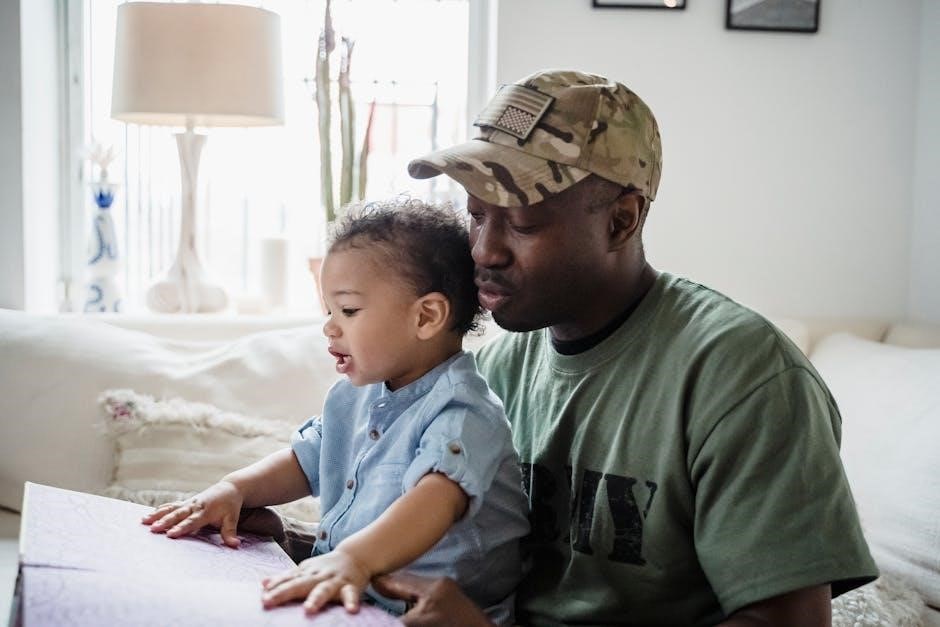
The narrative might emphasize the enduring nature of trauma, indicating that while physical presence is restored, emotional wounds persist. Alternatively, the ending could offer a glimmer of reconciliation, showcasing the family’s resilience. Ultimately, the ambiguity invites readers to contemplate the long-term consequences of war.
XIX. The Novel’s Relevance to Contemporary Society
Despite current PDF access issues, the novel’s themes resonate deeply with modern experiences of veterans returning from conflicts. The exploration of PTSD, family readjustment, and the psychological toll of war remains profoundly relevant in a world grappling with ongoing military engagements and their aftermath.
The narrative prompts crucial conversations about mental health support, societal responsibility towards veterans, and the often-invisible wounds of war. It encourages empathy and understanding, fostering a more informed perspective on the challenges faced by those who serve and their families.
XX. Finding and Downloading the PDF Safely
Given the current “508 Resource Limit Is Reached” error, locating a reliable PDF source proves challenging. Exercise extreme caution when searching online, prioritizing reputable academic databases, publisher websites, or established digital libraries.
Avoid unofficial or unknown sources to mitigate the risk of malware or compromised files. Always scan downloaded PDFs with updated antivirus software before opening. Verify the file’s integrity and origin whenever possible, ensuring it aligns with legitimate distribution channels. Prioritize safety during your search.
XXI. Copyright and Legal Considerations Regarding the PDF
Accessing “Father Comes Home From The Wars” as a PDF necessitates careful consideration of copyright laws. Unauthorized distribution or downloading of copyrighted material is illegal.
Ensure any PDF obtained is from a legitimate source – a licensed vendor, library, or with explicit permission from the copyright holder. Respecting intellectual property rights is crucial. The current website limitations suggest potential copyright enforcement or licensing issues. Prioritize legal access methods to avoid infringement and support the author’s work.